Your Northwest Arkansas Real Estate Experts
The levers above only work if the person pulling them has done this deal before. Tell us the price band and area you’re shopping in, and we’ll match you with the agent who’s negotiated it in NWA.
Home Price Negotiation in Northwest Arkansas is the work between an offer and closing: counters, appraisal gaps, repair credits, and closing costs. Collier and Associates negotiates these terms daily across Bentonville, Rogers, Fayetteville, and Springdale.
Home price negotiations in Arkansas are structured processes that begin before the offer is written and end at closing. These negotiations begin with Collier and Associates agents conducting a comparative market analysis (CMA) to determine the home’s fair market value. Then a home offer is created. A home offer is a legally binding purchase agreement that includes the offering price, an earnest money deposit, closing date, and contingencies that commonly involve financing, inspection, or appraisal issues. This process continues with inspection-period negotiation, appraisal response, and any closing-day issues. Collier and Associates understands that buyers in NWA are negotiating from the moment comps are pulled to the moment the deed records.
The biggest misconception is that negotiation is only about getting the price of the home lower. Multiple factors contribute to the true cost of buying a home, only one of them being the sticker price of the home. In a market like Northwest Arkansas, having an agent that understands the other levers that can save buyers money is important. Closing-cost concessions, repair credits, appraisal-gap exposure, and who pays the buyer’s agent are all levers to help save money. This page walks through what those factors are and how Collier and Associates uses them.
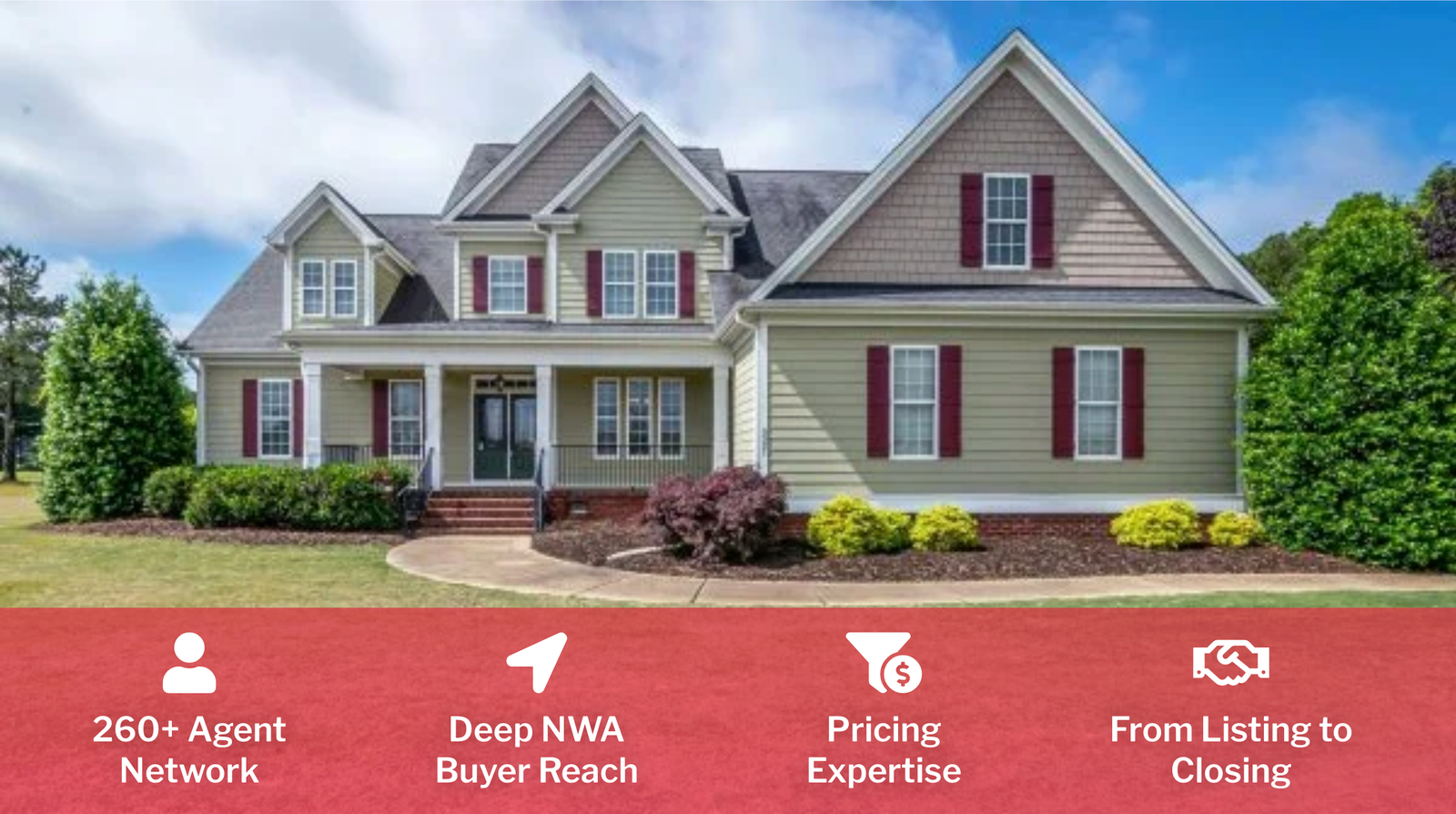
Negotiation is where a buyer’s agent earns their keep, and it’s a core part of how we represent buyers.
The NWA market has moved out of the bidding-war period it was in from 2021 to 2023. Inventory is finally starting to catch up with the demand, the average days on market for a house has lengthened, and sellers are conceding more in negotiations. This means buyers are starting to be able to ask for more and walk away from more without losing the deal.
Smart offers are looking different than they did in 2024. Concessions and credits were uncommon previously but are now back on the table for buyers. Aggressive contingency waivers aren’t needed to get your foot in the door anymore. Additionally, walk-away leverage has returned. Your legal right to walk away from deals and get earnest money back is something that is back on the table due to the market’s supply finally catching up with the demand.
Negotiating a $1.2M home in Pinnacle is a different job than negotiating a $310K USDA-eligible property in Cave Springs. The playbooks are not interchangeable. Multi-offer luxury, stale FHA-friendly listings, builder negotiations in Centerton, and out-of-state relocation buyers each require a different read.
Collier’s Agent Matcher pairs you with an agent who has done that specific kind of deal in NWA before, not an agent who’s about to learn on yours. The pairing happens before you write your first offer, so the negotiation is being run by someone who already knows what to expect on this property type, in this price band, in this part of NWA.
When a Collier agent writes an offer on a specific home, they can pull on the brokerage’s collective history with that property and that seller. Has another Collier agent shown the house? Did a previous buyer pass on it, and why? Did the seller counter another offer recently, and at what number? Did a Collier agent represent the seller on the previous sale and know the foundation history?
A 240-agent brokerage with an internal lead-sharing culture carries distributed memory about NWA properties that solo agents and smaller offices don’t have access to. That memory shows up in negotiations as fewer counter rounds, sharper opening offers, and earlier warnings about properties that have a history worth knowing about.
Most buyers think of negotiation as the offer-acceptance round. There’s a second negotiation that happens after the inspection, and it’s where most NWA deals actually fall apart. Both sides are emotionally invested, the buyer has paid for an inspection, the seller has been off market for two weeks, and one wrong move on either side ends the deal.
Collier and Associates agents work the second negotiation as a separate discipline. That means triaging inspection findings into must-fix safety items versus wishlist items before any request goes to the seller, scoping the request so the seller has a face-saving way to agree, and knowing when to push for a credit at closing instead of asking for the work to be done. Most failed deals at the inspection stage involve buyers whose agent treated this round as paperwork instead of a negotiation.
The levers above only work if the person pulling them has done this deal before. Tell us the price band and area you’re shopping in, and we’ll match you with the agent who’s negotiated it in NWA.
The headline number, but in NWA’s current market it’s often not where the most movement happens. Buyers in Bentonville and Rogers frequently save more on terms than on the sticker price.
The seller covers a portion of your closing costs, which keeps cash in your pocket at closing and often saves more than an equivalent price reduction over the life of the loan. This is the right move when you’re cash-tight at closing but comfortable with the monthly payment.
Since the August 2024 NAR settlement, your agent’s compensation is negotiated in your offer rather than baked into the listing. NWA sellers are still commonly covering some or all of it, especially on entry-level price points and listings that have been sitting.
Larger earnest money signals you’re serious and can offset a lower price or weaker terms; smaller earnest money preserves your downside if something goes wrong. The right number depends on how competitive the listing is and how much risk you’re willing to put up front.
After your inspection, you can ask the seller to fix specific items, drop the price, or credit you at closing. Arkansas contracts typically give you five to ten business days for the inspection period, which is enough time to scope the request carefully if your agent moves fast.
Instead of asking the seller to manage contractors before closing, you take the cash at closing and hire your own. This is usually the cleaner move for anything that isn’t a safety issue, since you control the quality of the work and the timeline.
You agree to cover the difference between the appraised value and your contract price, up to a ceiling you set in the offer. This strengthens a competitive offer without raising the price, but only commit what you actually have in cash — the ceiling is money you owe on top of your down payment.
Sellers often have a tight timeline tied to their next move. A buyer who can shift the closing date or offer the seller a short post-closing rentback often beats a higher offer with a rigid date.
What conveys with the house is negotiable: refrigerator, washer and dryer, mounted TVs, swing sets, lawn equipment, hot tubs, shed contents. Cheap to ask for, sometimes given without a counter, especially on relocation sales where the seller doesn’t want to move the items anyway.
A seller-paid one-year home warranty is a small concession that meaningfully reduces your first-year risk on an older home. Worth asking for on resale properties in Fayetteville’s older neighborhoods or anywhere the systems are aging.
Financing, inspection, and appraisal contingencies are your exits, and how they’re timed matters as much as whether you have them. Tightening a timeline is usually the smarter concession than dropping a contingency entirely, since you keep the right to walk and still look decisive to the seller.

Before any offer goes out, your agent runs a comparative market analysis on the specific property and pulls everything available about the listing’s history. Days on market, price drops, prior offers if disclosed, signs of seller motivation. NWA pricing varies sharply by area, so what’s a fair number in Bentonville isn’t the same as Fayetteville or Springdale. The negotiation gets decided here, before a single number goes on paper.
You and your agent choose which levers to pull together. Price, earnest money, contingencies, closing date, repair limits, and buyer agent compensation all get set in this round. A well-built offer often wins without being the highest dollar amount. In NWA’s current market, contingency-heavy offers are competitive again on most properties, which wasn’t true two years ago.


Most NWA deals settle after two or three rounds of back and forth. The order in which concessions are revealed shapes the final terms more than buyers realize. We work the order, not just the math. That means knowing which lever to give up first, which to hold back, and when to stop countering and walk.
This is where most failed NWA deals actually break. Arkansas contracts typically give buyers around 10 business days for the inspection period, which is enough time to triage findings into must-fix safety items versus cosmetic wishlist items. We separate those before any request goes to the seller. The cleaner the request, the more likely it lands.

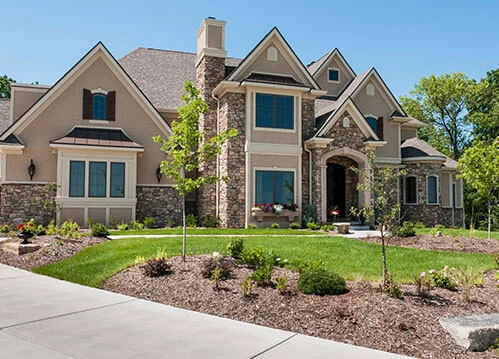
The appraisal comes back. If it’s low, this triggers the gap negotiation we structured back in step 2. Financing finalizes, the final walkthrough happens, and the deed records. Typical NWA closing timelines run roughly 30 to 45 days for conventional and FHA, 35 to 45 for VA, 30 to 60 for USDA, and 7 to 21 for cash. Deals can reopen at this stage. We plan for that rather than getting surprised by it.
It depends on the property. The honest answer is that there’s no rule of thumb that works across NWA right now. A house that’s been sitting in Centerton for 90 days with two price drops is a different conversation than a fresh listing in Pinnacle that’s about to get three offers by the weekend.
The right number comes from the comps on that specific property, the days on market, the seller’s situation if your agent can read it, and what the listing agent has signaled about flexibility. A 5% under-ask offer might be the smart play on one house and a deal-loser on the next one down the street. Your agent should be giving you a range tied to that listing, not a generic percentage.
A well-structured lower offer rarely offends. A lowball with no rationale and weak terms is what loses deals.
Sellers and listing agents understand that buyers’ offers are starting points for a negotiation. What gets a low offer rejected outright isn’t usually the price. It’s a low price paired with a long closing timeline, weak earnest money, and a request for every concession in the book. If the offer is built carefully, with a clear basis for the number and reasonable terms around it, most sellers will counter rather than walk away. Counter rounds are how negotiations work.
Roughly a dozen things. The full list is in the section above on this page, but the highlights buyers most often miss: seller-paid closing costs, repair credits at closing instead of repairs done by the seller, appraisal-gap coverage with a defined ceiling, closing-date flexibility or a post-closing rentback for the seller, what personal property conveys with the house, a one-year home warranty, and the structure of your contingencies.
In NWA’s current market, a buyer who only negotiates the price often leaves more on the table than they realize.
You have three real options. The seller can drop the price to match the appraisal. You can cover the gap with additional cash at closing. Or you can split the difference somewhere in the middle.
If your offer included an appraisal contingency without gap coverage, you also have the right to walk and recover your earnest money. If you wrote in appraisal-gap coverage up to a defined dollar amount, that ceiling determines what you owe before renegotiation kicks in. Buyers in Arkansas can also challenge an appraisal by submitting comparable sales the appraiser may have missed, though this rarely changes the appraised value.
On most NWA properties right now, no. Waiving inspections was a 2021 to 2023 tactic, when listings pulled five offers in a weekend. Inventory has loosened and contingency-heavy offers are competitive again on most listings.
If you do need an edge, there are middle-ground moves: shorten the inspection period to five days, cap your repair requests at a set dollar threshold, or go information-only so you keep the right to walk but waive the right to ask for repairs.
A full waiver means you accept the house as it sits. That risk is rarely worth it on older Fayetteville and Springdale homes or anywhere the roof and HVAC are aging out. It still makes sense in a true multi-offer fight in a Bentonville or Rogers school hotspot, or on new construction with a builder warranty.
Yes. Since the August 2024 NAR settlement changes, buyer agent compensation is negotiated as part of the offer rather than baked into the listing automatically. Asking the seller to cover some or all of it is now standard practice.
In NWA, sellers are still commonly agreeing to cover buyer agent compensation, especially on entry-level price points and listings that have been on the market for a while. Whether to ask, and for how much, is a tactical call your agent makes with you when you’re structuring the offer. It’s part of the same conversation as price and closing costs.
The pre-offer prep is hours to a day. From submitting an offer to having a signed contract usually takes one to seven days, sometimes longer if there are multiple counter rounds. The inspection negotiation runs 5 to 10 business days after the inspection is completed.
From your first showing to closing, expect roughly 30 to 60 days depending on your loan type. Conventional and FHA loans typically close in 30 to 45 days, VA in 35 to 45, USDA in 30 to 60, and cash in 7 to 21. The negotiation isn’t a single event. It’s spread across that whole window.
Builder contracts have their own set of levers, covered under new construction home sales. Bank-owned properties negotiate differently again, which we explain in bank-owned property sales. Everything starts from an accurate read on value, the same analysis behind our home value estimation. We negotiate on behalf of buyers in Rogers, Bentonville, and Fayetteville.
The levers above only work if the person pulling them has done this deal before. Tell us the price band and area you’re shopping in, and we’ll match you with the agent who’s negotiated it in NWA.